

FLEXIBLE LOCAL ENERGY COMMUNITIES
If the companies in the Industry Park work together, it is possible to increase the total power capacity and lower the grid costs.
We call this Flexible Local Energy Communities (FlexLEC).
In FlexLECs we use flexibility, load shifting, energy sharing and many other techniques to use the power grid in a smarter way. We can also include thermal energy and other energy mixes to make more business for the members of a FlexLEC.
The result is more power, and business, available.
VALUE STACK
cost saving and increased revenue
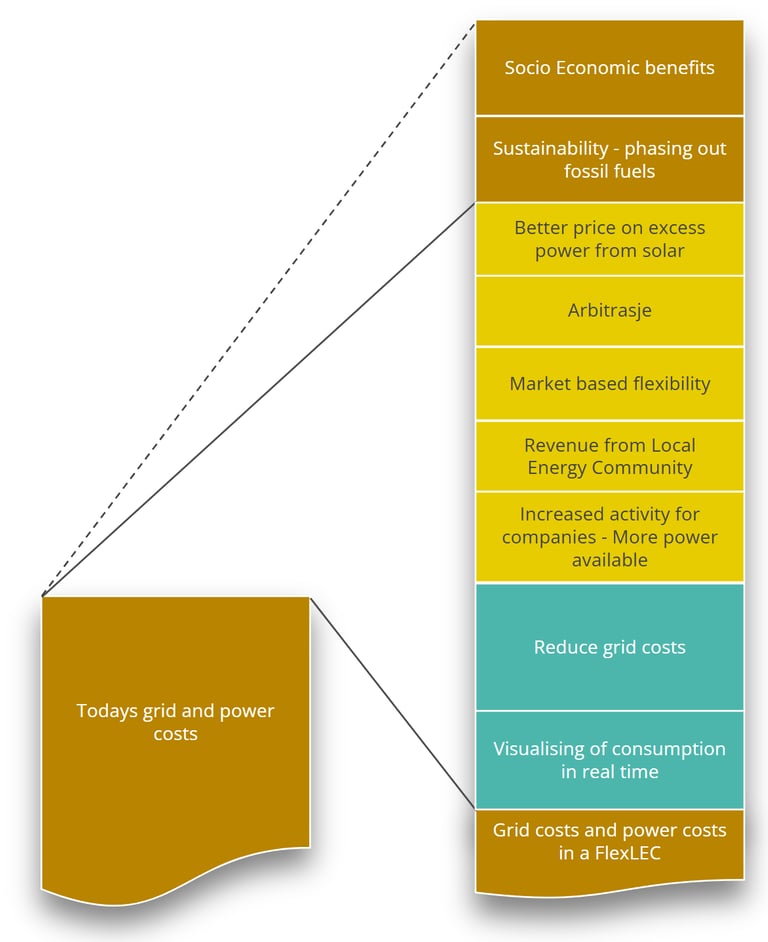
A Flexible Local Energy Community (FlexLEC) unlocks multiple value streams, helping member companies reduce costs and generate additional revenue. For example, real-time data visualization alone can deliver 3% savings on energy costs, while a new collective tariff can cut grid costs by 10–20%. Additionally, selling flexibility in the local market—on top of participating in the national flexibility market—further enhances the value stack.
We start by targeting the low-hanging fruit, delivering immediate value to FlexLEC members.
Contact us to get more information on how your business can benefit.
Flexibility in energy systems can take many forms. For example, companies may delay the start of industrial processes by a few hours, batteries or generators can feed power into the local grid, and traditional demand-response assets can be temporarily turned off during peak demand. Additionally, thermal energy (such as steam) can be produced during off-peak periods, while vessels docked at the quay can support the local grid by supplying energy to shore-based infrastructure.
The second step is therefore to identify the flexibility in the industrial park, and to automate the control of the flexible assets.


Analyse consumption and identify flexible assets
Identify extra grid capacity
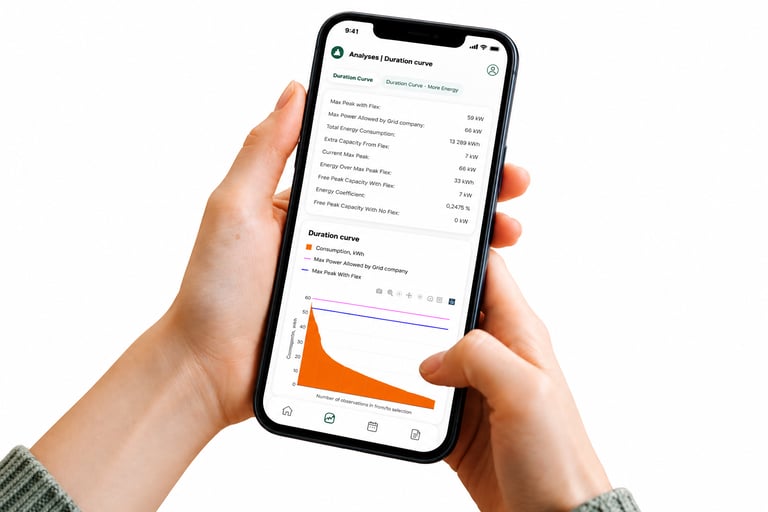
The grid’s capacity limit is determined by the single hour each year when industrial consumption peaks. For the remaining 8,759 hours, only a fraction of the available capacity is utilized. Consequently, the first step in the analysis is to create a duration curve that identifies the industry’s flexibility potential.
The first step is therefore to make a duration curve that identifies the flexibility potential for the industry. From the duration curve we will see the usage of the grid, and how much flexibility is needed to lower the power peak by e.g. 10%.
DURATION CURVE
Benefits for the businesses
Don't wait 5-10 years for more power - get flexibility
Replace fossil energy with clean power
More power available by flexibility can be used to replace fossil fuels, contributing to a greener future.
Environmental accounting is becoming gradually more important for all stakeholders in the business processes. A move towards green energy is beneficial for both the business and the environment
Expansion of the business
Businesses in a power grid area with bottlenecks are not able to get more power available before the grid company expands the existing grid. This can take 5-10 years, or even more.
Flexibility enables more power now, which can be used to expand the business and increase its profit.
01
02
New companies in the industrial park
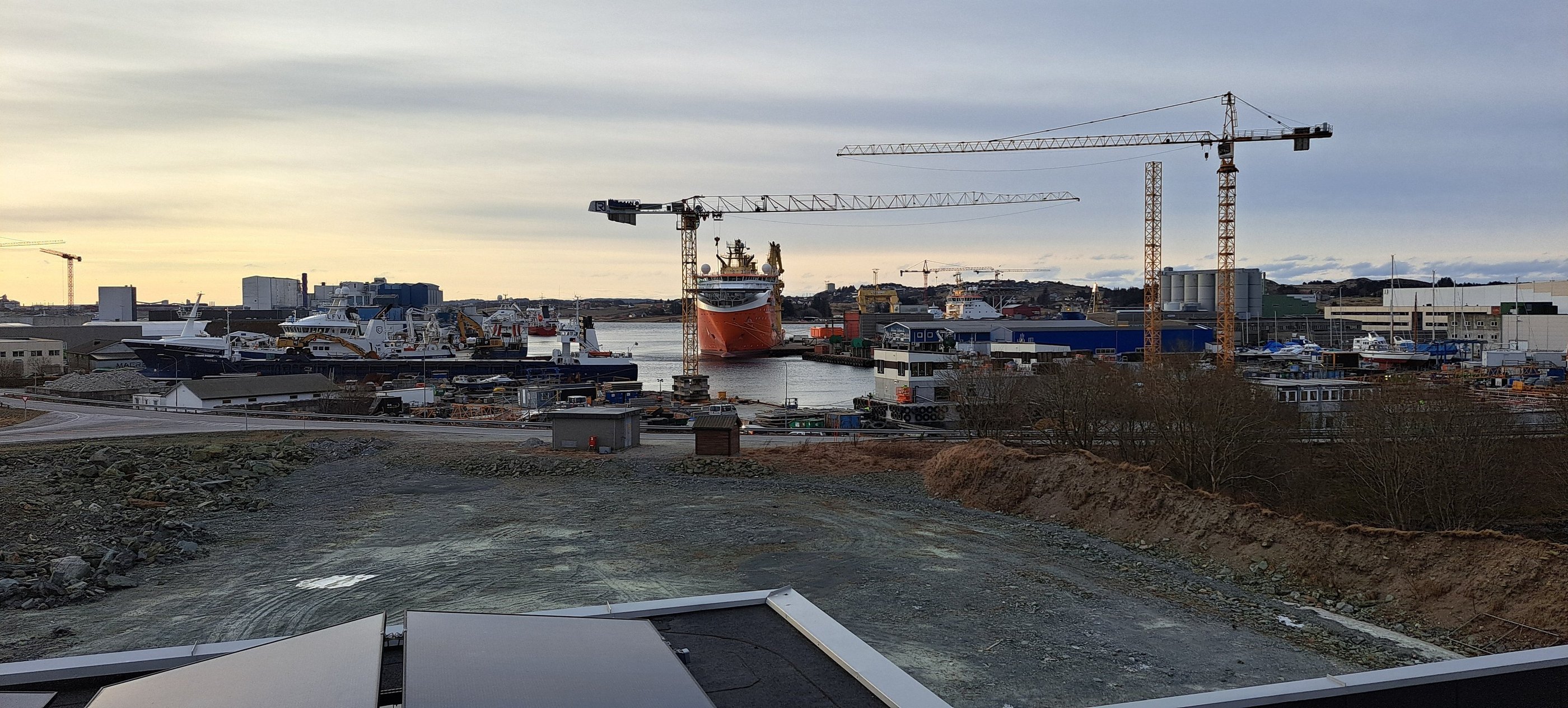
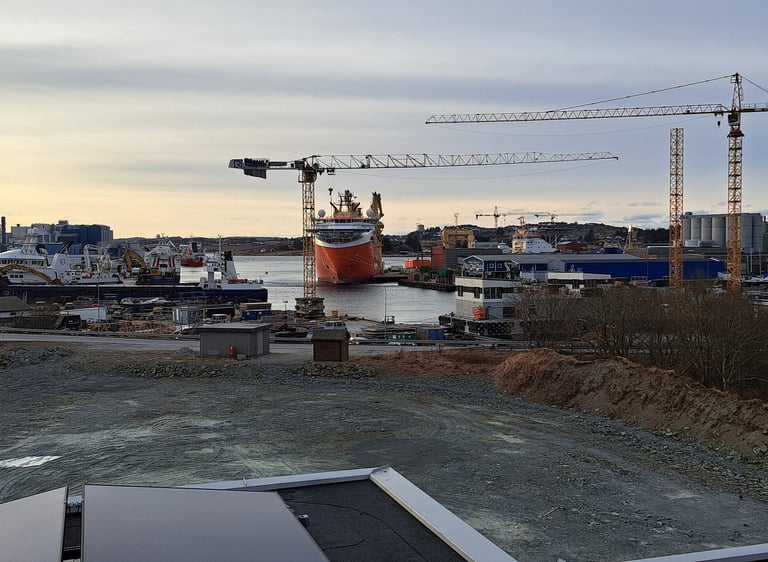
Grid bottlenecks prevent new businesses from moving into the park.
This can not only reduce the income for the industrial park, but also negatively impact the local community, depriving it from new workplaces and tax income.


Being in control of flex assets
By creating a Flexible Local Energy Community the industry in the park has full control over the usage of flexibility, and the way each company can benefit from flexible assets even without the need for flexibility.
For example, a battery can be charged when the power prices are low, and be discharged when the prices are higher.
03
04
Flexpartner FECM
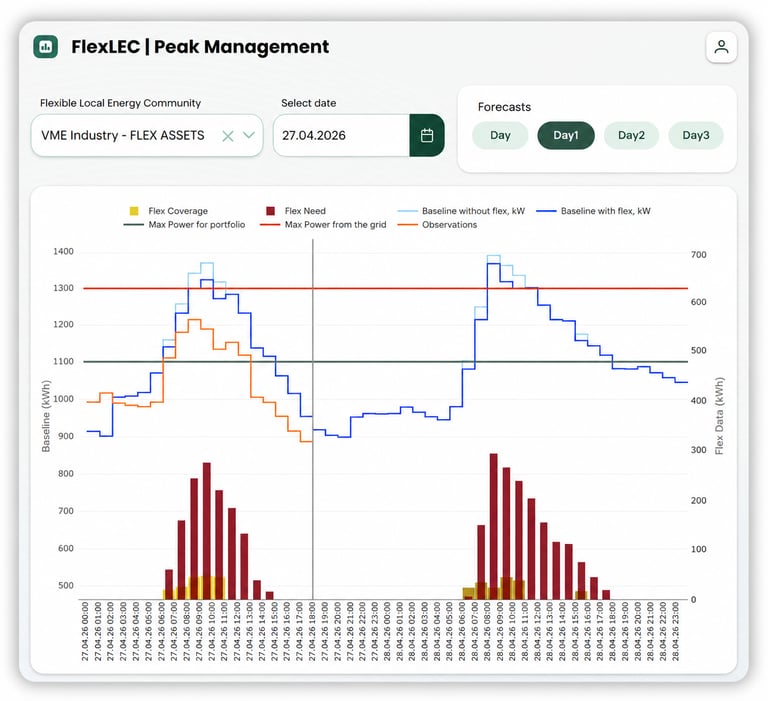
The Flexpartner Flexibility and Energy Community Management system (FECM) is used to operate the energy used in the industrial park (Flexible Local energy community).
The forecast service in the FECM and the real time consumption profile identifies maxUsage issues, and automatically activates flexible assets when needed so that we never go over the grid maximum limit.

flexpartner.energy
Contact us to hear more about flexible local energy communities or market-based flexibility.
NEWSLETTER
© 2026 by Flexpartner.Energy
Innovation Park, Stavanger
Post Box 8034
4068 Stavanger, Norway